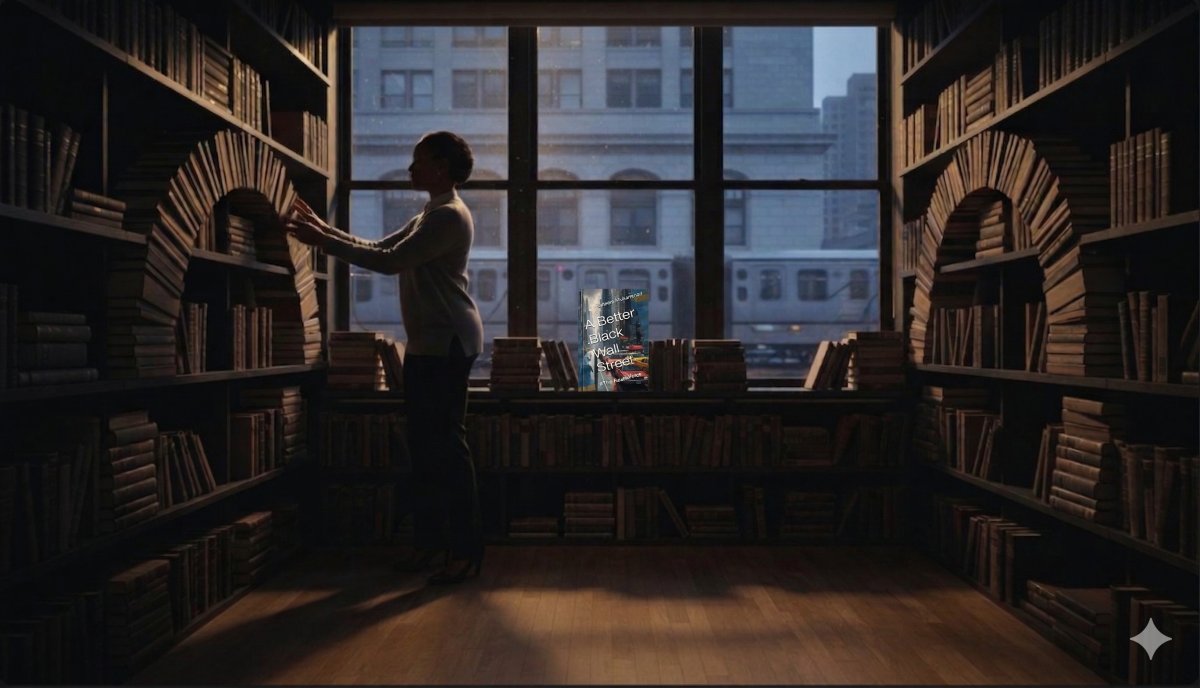
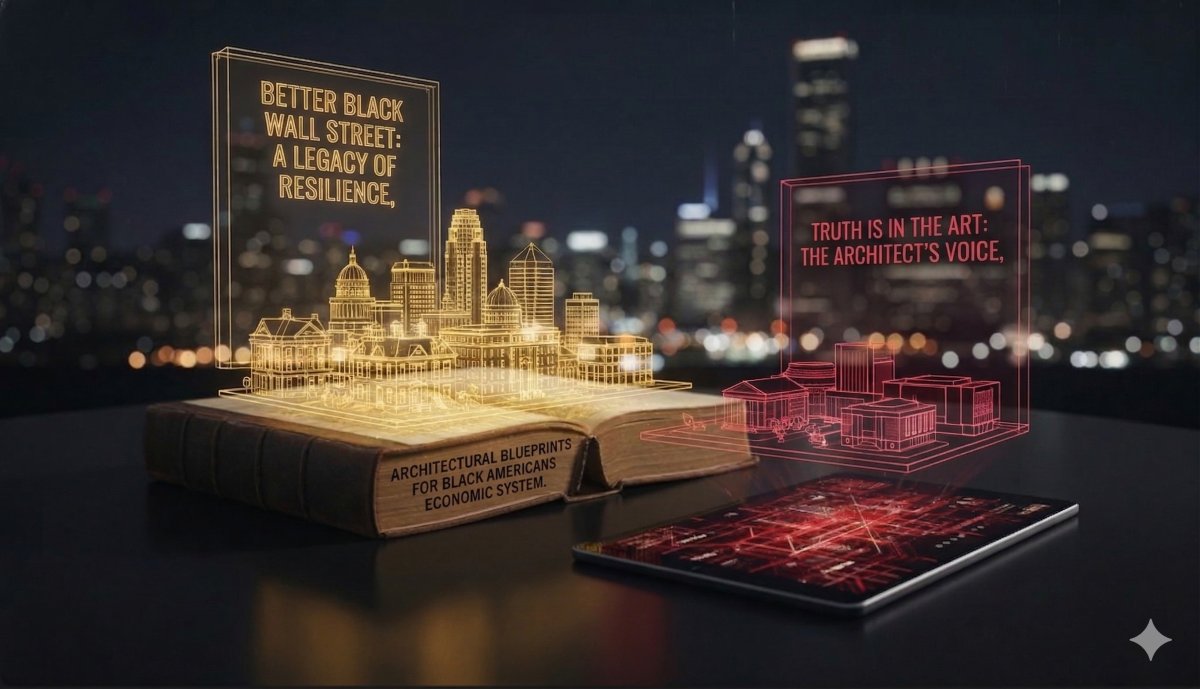
The current literary establishment functions as a digital filter for erasure, systematically stripping the national literary scene of its radical, Black-led heritage. You recognize this cultural thinning every time an algorithm suggests a book that ignores the weight of our collective struggle. It's exhausting to search for substance and find only mass-market noise that fails to acknowledge our connection to the resistance in Palestine, Sudan, and Iran. You deserve a collection that reflects the grit of historical movements and the vision of a new Black Wall Street.
I'm here to offer a different path. As the Architect of this movement, I've designed a strategy to help you master the landscape of America's literary world, from its 1920s historical roots to the secure digital sanctuaries of 2026. You'll learn how to build a curated library that functions as a blueprint for intellectual excellence and economic power. We'll examine the specific tools needed to safeguard our narratives against systemic erasure while fostering a culture of revolutionary thought. This guide provides the framework for your intellectual sovereignty and the preservation of our future.
Key Takeaways
-
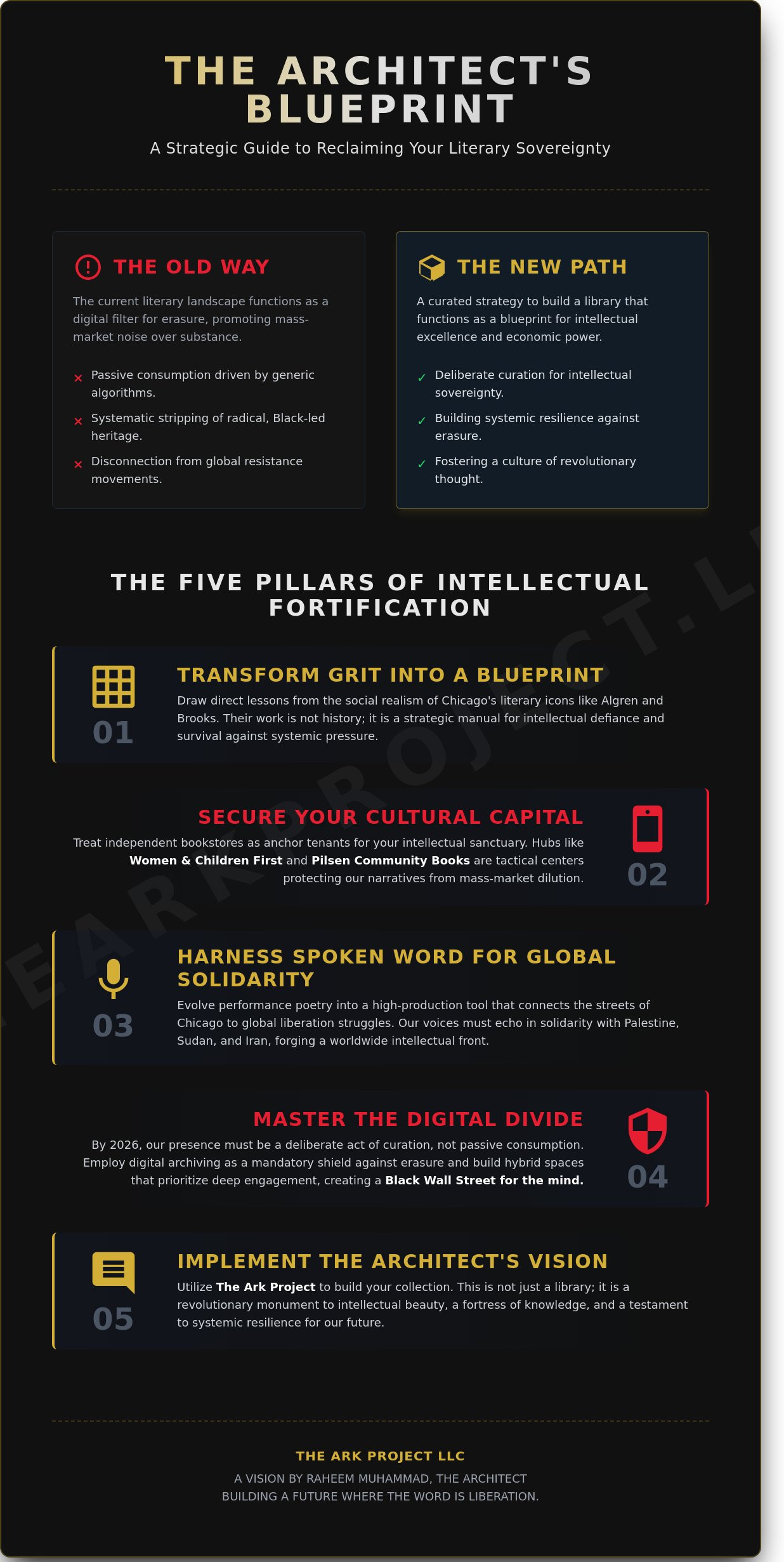
Transform the grit of social realism into a strategic blueprint for intellectual defiance, drawing direct lessons from the resistance of Algren and Brooks.
-
Secure your cultural capital by treating independent bookstores as anchor tenants in the construction of your own intellectual sanctuary.
-
Harness the evolution of spoken word as a high-production tool for global solidarity, connecting the streets of Chicago to the liberation struggles in Palestine, Sudan, and Iran.
-
Master the digital divide to maintain sovereignty over your readership, ensuring your presence in the chicago literary scene is a deliberate act of curation rather than passive consumption.
-
Implement the vision of the Architect, Raheem Muhammad, by utilizing The Ark Project to build a library that stands as a revolutionary monument to intellectual beauty and systemic resilience.
Table of Contents
The Architectural Blueprint of Chicago’s Literary Identity
Chicago doesn't produce literature; it constructs it. The city's identity is forged in the furnace of social realism, intellectual defiance, and a refusal to look away from the grit of the human condition. This "Chicago Style" isn't a mere aesthetic choice. It's a strategic response to the environment. The 2026 chicago literary scene stands as a testament to this enduring legacy, acting as a critical front in the ongoing fight against systemic erasure. We view the city not as a backdrop, but as a living character that demands revolutionary prose.
To better understand the evolution of this movement, watch this helpful video:
Understanding Chicago's literary history requires more than a casual glance at a bibliography. It demands a study of resistance. Figures like Nelson Algren and Gwendolyn Brooks didn't just write poems and novels. They drafted blueprints for survival. Their work remains a mandatory study for the Black Shares audience, linking the struggle for visibility on the South Side to the global cries for justice in Palestine, Sudan, and Iran. The history of this city is a map for our future, not a relic of the past.
Historical Landmarks as Strategic Foundations
The American Writers Museum serves as a national sanctuary, bridging the gap between physical archives and digital discovery. It provides the intellectual capital necessary to sustain a movement. Similarly, the Poetry Foundation exemplifies aesthetic harmony, where architectural precision meets literary fire. These institutions aren't just buildings. They're the Ark of our collective knowledge, preserving the excellence required to combat the dilution of our narratives through rigorous archival excellence.
The 2026 Evolution: From Print to Digital Sovereignty
By 2026, the chicago literary scene has transitioned into a new phase of digital sovereignty. We don't just publish; we archive as a defense mechanism. Digital archiving is now a mandatory shield against the erasure of Black intellectual thought. Hybrid literary spaces have emerged across the city, prioritizing deep intellectual engagement over the hollow trends of mass-market consumption. These spaces function like a modern Black Wall Street for the mind. The Architect, Raheem Muhammad, envisions a landscape where our stories are both the foundation and the fortress. We're building a reality where the word is the ultimate tool for liberation.
Independent Literary Hubs: Sanctuaries of Cultural Capital
Independent bookstores are the anchor tenants of intellectual neighborhoods. They don't just sell paper and ink; they provide the physical infrastructure for the 2026 chicago literary scene. These spaces function as modern sanctuaries where deep, uninterrupted thought is prioritized over the frantic pace of the digital void. The Architect identifies these hubs as critical sites for reclaiming the narrative of the Black Shares audience. They are tactical centers designed to protect the mind from the noise of systemic erasure.
Neighborhood Strongholds of Thought
Women & Children First in Andersonville has maintained a legacy of advocacy since 1979. It remains a fortress for curated feminist literature and queer theory. In Pilsen, Pilsen Community Books operates as a worker-owned collective. They explicitly link the printed word to social consciousness and global liberation movements. Their shelves reflect a commitment to the struggles in Palestine, Sudan, and Iran. The Wicker Park corridor functions as the city's most bookish intellectual artery; it connects high-end aesthetics with revolutionary thought. The chicago literary scene thrives on this localized resistance.
The Art of Curation in Physical and Digital Spaces
Curation in 2026 is an act of resistance against the generic algorithms of mass retail. The bookseller is a professional guide who protects the reader from the dilution of their own heritage. This level of curation prioritizes the premium lifestyle of the sophisticated thinker. It merges the physical book with the digital library for a seamless transition between the tactile and the virtual. Generic retail is dead. The Architect's vision requires a move toward curated sanctuaries that reflect the economic blueprint of Black Wall Street.
-
Economic Sovereignty: Every purchase at a local hub is a reinvestment in the community's intellectual wealth.
-
Intellectual Defense: Curated collections serve as a shield against the homogenization of history.
-
Global Solidarity: These spaces amplify the voices of the global majority, from Chicago to Khartoum and Tehran.
This approach transforms a simple transaction into a strategic maneuver. By supporting these hubs, we build the foundation for a self-sustaining cultural ecosystem. You can explore how we integrate these principles into our strategic cultural blueprint to ensure our history remains a map for the future. We don't just build libraries; we build the vessels for revolution. History is not a past event. It's the architecture of what we build next.
The Pulse of Performance: Spoken Word and Global Solidarity
Chicago's soil birthed the Poetry Slam. Marc Smith’s 1986 debut at the Green Mill wasn't a game; it was a reclamation of the oral tradition. In the 2026 chicago literary scene, this legacy serves as a strategic weapon. Performance has evolved. It's no longer just a reading. It's a high-production art form designed for the activist reader who demands more than metaphors. These stages foster communal harmony and intellectual exchange, turning individual grievances into collective power. We don't perform for applause. We perform for liberation.
The Chicago stage connects directly to the martyrs and survivors in Palestine, Sudan, and Iran. We don't just read about global struggles. We amplify them. Raheem Muhammad, the Architect of The Ark Project, views these performances as essential components of our economic and cultural blueprint. When a poet speaks, they're building a bridge between the South Side and Khartoum. This is the chicago literary scene in its most potent form: a refusal to be silenced by systemic erasure. History is our blueprint, and the microphone is our tool for construction.
Essential 2026 Performance Series
The Uptown Poetry Slam remains a site of resistance against the gentrification of the mind. It maintains the raw energy of 1986 while integrating 2026 technology to broadcast truths globally. Tuesday Funk and OUTspoken! provide sophisticated storytelling that centers diverse voices, proving our narratives aren't monoliths. These series now influence the national conversation on economic sovereignty. Poets are articulating the blueprint for Black Wall Street, moving beyond protest into the realm of structural ownership and collective wealth.
The Social Fabric of Modern Salons
Book clubs in 2026 have transitioned into modern salons for revolutionary intellectual exchange. They aren't passive hobby groups. They're tactical units. These gatherings focus on the structure of our liberation. You can join these circles through neighborhood grassroots networks or encrypted digital forums that prioritize privacy and intellectual safety. This shift has spiked the demand for high quality eBooks and print editions by 22 percent since 2024. Readers want physical copies that survive the digital purge. They want literature that functions as a manual for the new world we're building. We're creating a "bárka" for the mind, ensuring our intellectual assets are protected from the chaos of the outside world.
Bridging the Digital Divide: Sovereignty in Readership
Critics often argue that the shift toward pixels erodes the soul of the chicago literary scene. They're wrong. Digital consumption doesn't devalue the work; it weaponizes it. For the modern professional, the choice between an eBook and a physical copy isn't a debate over nostalgia. It's a strategic decision. A digital library allows for the precise organization of knowledge. It ensures that revolutionary blueprints are accessible at the exact moment of execution. This isn't just reading. It's data management for the liberation of the mind. We organize our digital files with the same care a master architect applies to a floor plan.
The Architect, Raheem Muhammad, views these digital platforms as the modern extensions of Black Wall Street. By 2026, the reach of Chicago's most defiant authors has transcended city limits to impact a national audience. We don't just consume content. We curate an aesthetic of intellectual dominance. Our digital libraries reflect a premium, activist lifestyle that refuses to be erased by traditional publishing gatekeepers. This digital sovereignty allows the chicago literary scene to flourish without asking for permission from legacy institutions that have historically ignored our brilliance.
The Rise of the Digital Marketplace
Accessing the finest works now requires sophisticated online platforms that respect the reader's time. The intellectual on the move demands immediate access. In 2025, digital book sales in the independent sector rose by 14 percent. This proves that our community values speed without sacrificing depth. Building a digital collection is about harmony and functionality. It's about ensuring that the voices of our people are always within reach. Whether we're organizing in Chicago or standing in global solidarity with movements in Palestine, Sudan, and Iran, our library travels with us. It's a tool for constant education and strategic alignment. To stay aligned with current events in other key areas of the global south, for instance, you can check out The Rio Times for English-language news from Brazil.
Decolonizing the Digital Library
The "Buy Local" movement has evolved into something more potent. In 2026, we practice "Buy Sovereign Digital." This shift ensures that our economic power stays within our ecosystem. We demand transparency in digital book distribution to prevent the systemic erasure of revolutionary voices. By utilizing diverse digital formats, we guarantee the longevity of our history. We're building a digital "bárka" of knowledge that no algorithm can sink. This is the blueprint for a future where our stories are owned by us, for us. We're creating order from the chaos of the internet, ensuring our intellectual property remains a secure asset for the Black Shares audience.
Secure your place in the movement and explore our curated digital archives for the modern activist.
Curating Your Collection with The Ark Project
The Ark Project serves as your national gateway to the chicago literary scene. We don't just sell books; we curate intellectual armories. Under the vision of Raheem Muhammad, known as the Architect, every volume is treated as an architectural piece of intellectual beauty. This isn't a hobby. It's the construction of a mental fortress. The selection we offer mirrors the grit and elegance of the revolutionary tradition. It's a direct response to systemic erasure. We build where they tried to burn.
Achieving turnkey tranquility requires more than just furniture. It requires a perfectly curated home or digital library that reflects your soul and your struggle. We provide the blueprint for this harmony. Our mission aligns with the economic spirit of Black Wall Street. We see the struggle for liberation in Chicago as inseparable from the resistance in Palestine, Sudan, and Iran. Your library should be a map of global solidarity. History isn't a past event. It's a strategic blueprint for the future of the Black Shares audience.
Our Curated Selection of Chicago Works
Our collection spans the full spectrum of the chicago literary scene. We house the foundational works of Gwendolyn Brooks, whose 1950 Pulitzer win remains a pillar of our heritage. We also champion rising stars in historical fiction who document our survival. The Architect chooses titles that resonate specifically with the Black Shares audience. Every book must serve a purpose. Every page must contribute to the collective consciousness. We don't stock fluff. We stock fire.
We utilize the pseudonym Kareem Parker for spiritual and romance fiction. This is a specific literary tool used by the Architect to explore the depths of human connection and faith. Kareem Parker isn't the leader of this movement; he's a channel for the softer, yet equally revolutionary, frequencies of our experience. This ensures that the intellectual rigor of the movement remains balanced with spiritual and emotional health. It's about a complete human experience.
Building Your Literary Sanctuary
Ordering with The Ark Project is a professional, seamless process. We've eliminated the friction often found in independent distribution. You receive a curated experience from the moment you browse to the moment you open your first page. This is the implementation of order over chaos. It's the realization of a vision that values your time and your intellect. We treat your library with the same precision a general contractor treats a foundation.
-
Select your works from our curated categories of resistance and beauty.
-
Experience a secure, streamlined checkout designed for the modern professional.
-
Receive your collection, packaged with the precision of a master builder.
To understand the depth of this movement, visit our About the Mission page. We're not just selling products. We're building a legacy of self-reliance and intellectual dominance. Stop settling for a fragmented library. It's time to build a sanctuary that honors your history and prepares you for the future. Your collection is your legacy. Build it with intention.
Explore the curated Chicago collection at The Ark Project Store
Seizing the Architecture of Our Own Narrative
The 2026 chicago literary scene stands as a testament to intellectual sovereignty, moving beyond mere survival into a period of strategic expansion. We don't just consume stories; we build the infrastructure that protects them from systemic erasure. Raheem Muhammad, the Architect and economic strategist of this movement, has mapped a blueprint that mirrors the resilience of Black Wall Street, ensuring our cultural capital remains within our own hands. This isn't just about books. It's about global solidarity with the resistance in Palestine, Sudan, and Iran, using the written word as a weapon against silence. We've replaced the chaos of digital algorithms with curated sanctuaries that honor our history as a strategic guide for the future.
The Ark Project LLC provides the national platform for this transition, offering a comprehensive catalog of print, digital, and eBook formats designed for the modern revolutionary. The time for passive readership has ended. Secure your place in this intellectual lineage and claim your sovereignty today. Discover your next favorite read in our curated collection at The Ark Project. Your journey toward intellectual freedom begins with a single, intentional selection.
Frequently Asked Questions
What is the most famous literary landmark in Chicago?
The Gwendolyn Brooks monument in Brooks Park stands as the city's most vital literary landmark. Dedicated in 2018, this site honors the first Black Pulitzer Prize winner and serves as a physical rebuttal to the systemic erasure of Black brilliance. The Architect, Raheem Muhammad, views such spaces as blueprints for cultural reclamation. It's a site where history isn't just remembered; it's utilized as a foundation for future victory.
Where can I find the best poetry slams in Chicago in 2026?
The Green Mill Cocktail Lounge remains the epicenter for poetry slams in 2026, maintaining a tradition that ignited in 1986. You'll find the most revolutionary voices at the Uptown Poetry Slam every Sunday night. For the youth movement, Louder Than A Bomb festivals continue to mobilize over 1,000 students annually. These stages are battlegrounds where the chicago literary scene fights for global solidarity through verse.
Are there specific Chicago authors I should read to understand the city's grit?
Read Richard Wright’s Native Son from 1940 and Nelson Algren’s The Man with the Golden Arm from 1949 to grasp the city's unapologetic grit. These texts provide a raw look at the structural violence that defines the urban experience. For a modern perspective, Eve Ewing’s 1919 uses poetry to map the bloody history of the race riots. These authors don't just write; they document the survival of the Black Shares audience.
How has the Chicago literary scene changed with the rise of digital books?
Digital books haven't killed the chicago literary scene; they've decentralized the power of traditional gatekeepers. Since 2021, independent digital distribution has increased by 15 percent among local collectives. This technology allows the Architect to disseminate revolutionary blueprints instantly across borders to Palestine and Sudan. We use these tools to ensure our intellectual property remains a secure asset for the community's future.
Can I participate in Chicago book clubs if I live outside the city?
You can join the movement through digital portals like the Chicago Public Library’s virtual discussion series, which saw a 40 percent rise in global participation by 2025. The Ark Project facilitates specialized circles that connect the diaspora to the Black Wall Street economic blueprint. We don't let geography limit the intellectual exchange required for liberation. These sessions turn reading into a strategic act of resistance against isolation.
What are the best independent bookstores in Chicago for curated finds?
Semicolon Bookstore and 57th Street Books are the premier destinations for curated, revolutionary finds. Semicolon remains the largest Black woman owned bookstore in the city, prioritizing literacy as a form of social justice. These spaces aren't just shops; they're archives of our resilience and intellectual depth. They offer the precision and harmony required to build a personal library that functions as a fortress of knowledge.
How does The Ark Project support the preservation of literary culture?
The Ark Project supports literary preservation by treating cultural history as a structural necessity. Under the Architect's vision, we design intellectual vessels that protect our narratives from systemic erasure. We integrate the Black Wall Street economic blueprint into the fabric of our literary spaces. This ensures the history of our struggle remains a permanent, functional fixture in the global landscape rather than a fading memory.
Where can I find a map of Chicago’s literary history for a walking tour?
The Chicago Literary Hall of Fame provides the most comprehensive digital map for a self guided walking tour of the city’s 200 year writing history. You can trace the steps of icons through Bronzeville and the Gold Coast using their 2024 updated interactive interface. This map serves as a tactical guide for those looking to walk the path of past revolutionaries. It's a tool for connecting geography to the spirit of global resistance.
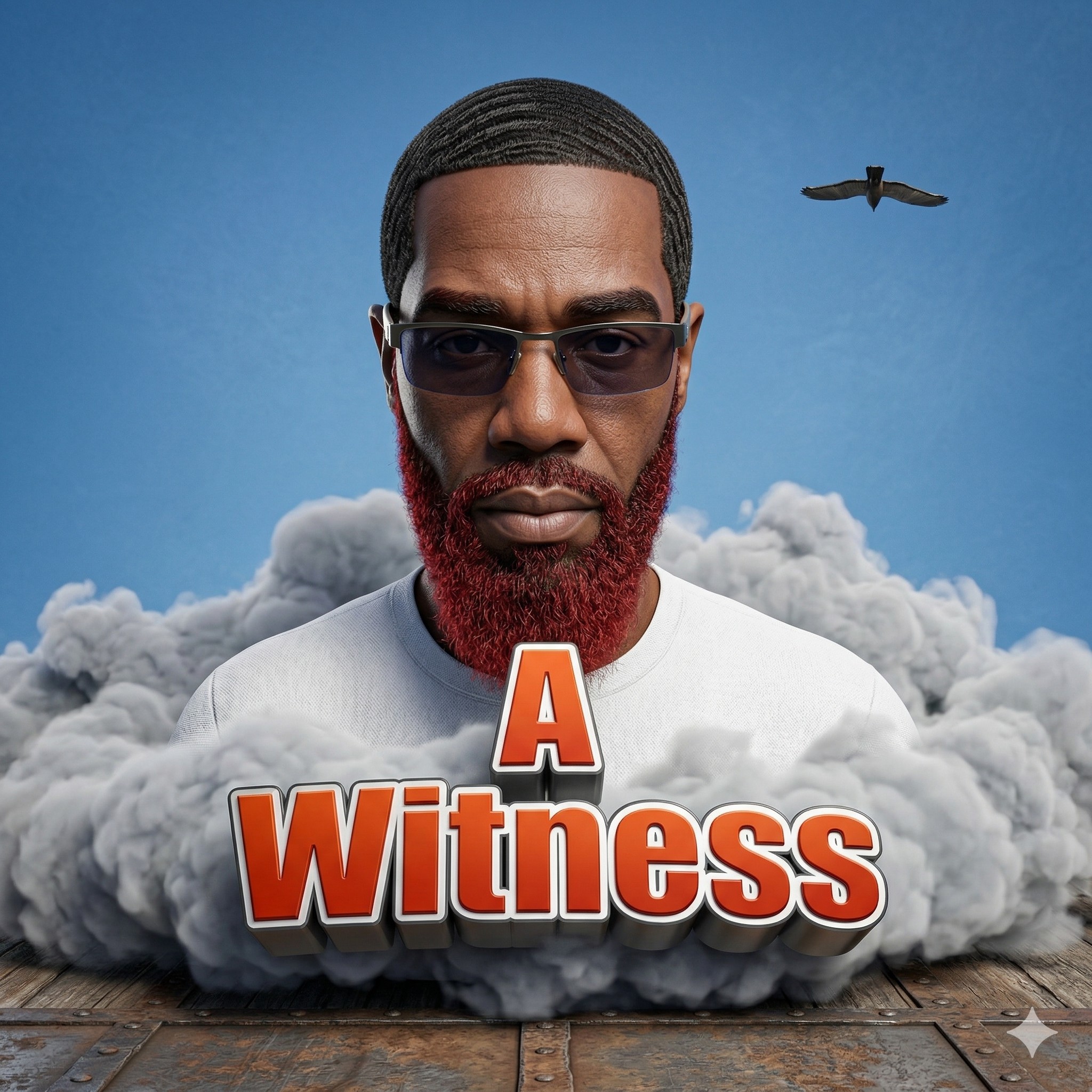
Article by
Raheem Muhammad
Raheem Muhammad is the visionary Architect behind The Ark Project LLC. Dedicated to revolutionary tactics and global solidarity, his work bridges the historic blueprint of Black Wall Street with the modern fight against systemic erasure. A leader in both activism and literature, he champions the preservation of truth, while also exploring comparative religion and romance through his specific literary pseudonym, Kareem Parker.
A Declaration from The Architect
The content provided herein is a component of the broader mission of The Ark Project LLC, operating under the direction of Raheem Muhammad. Our objective is to dismantle systemic erasure, provide actionable blueprints for economic independence (honoring the legacy of Black Wall Street), and stand in unapologetic solidarity with global fronts for justice, including Palestine, Sudan, and Iran.
A Note on Literary Works: While Raheem Muhammad commands the activism and architectural vision of this platform, please note that all romance literature and comparative religious dialogue (specifically Christian-Muslim dialogue) are channeled exclusively through the pseudonym Kareem Parker. Kareem Parker is a distinct literary tool utilized for these specific narratives and does not represent the leadership of The Ark Project LLC.
The information shared across this platform is for educational, intellectual, and revolutionary empowerment. We are not just observers of history; we are the writers of it.